Disassembling Mis/Disinformation, Reassembling Democracy
Musing about my AERA 2026 experience

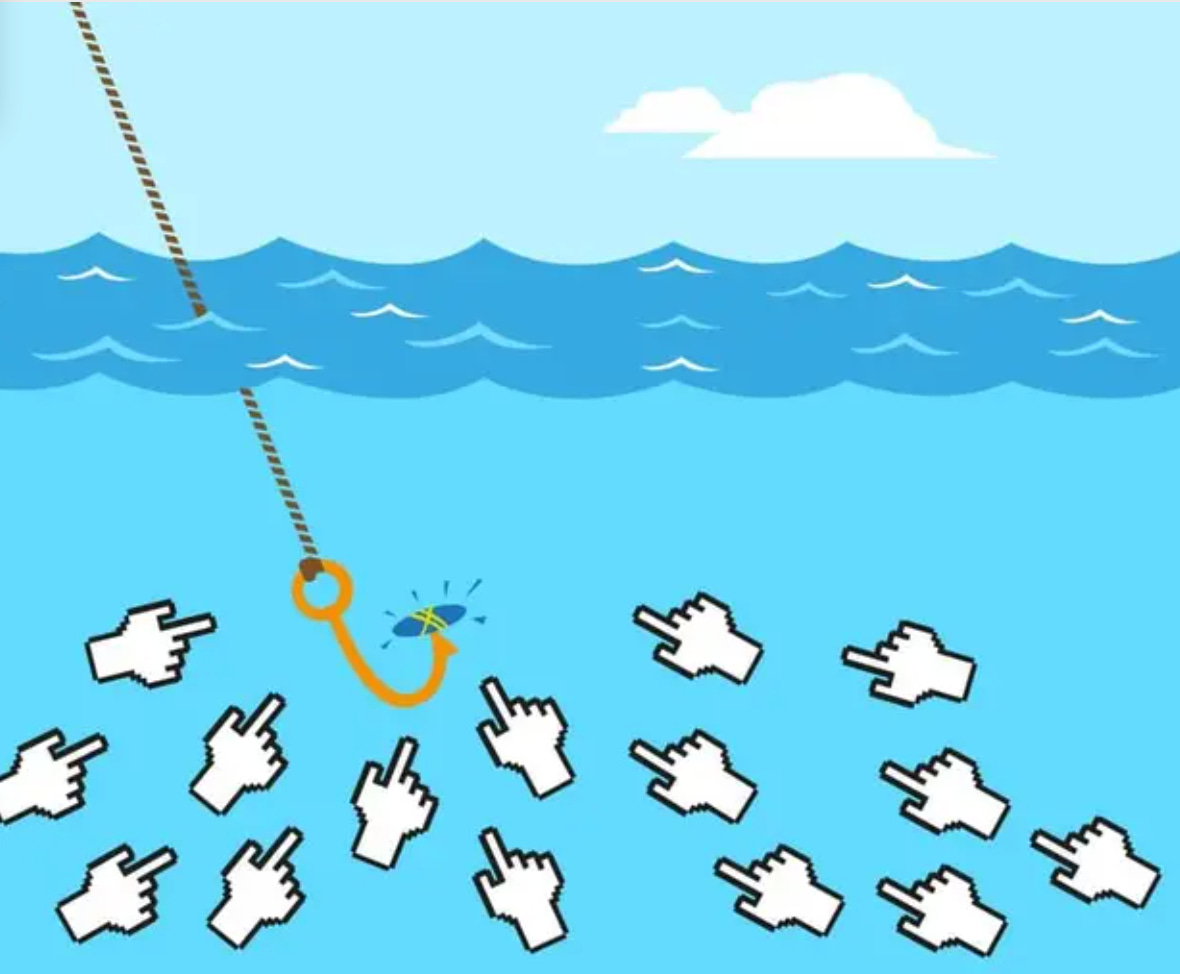
Let me tell you a story about being in the room where it happened.
It was 2013 or 2014. The “fake news” crisis hadn’t fully erupted, but everybody was already worried. Facebook convened a meeting that brought together three groups to advise them on how to spend their money: the fact-checkers, the news literacy folks, and the media literacy folks. We duked it out for a day and a half. From my point of view, the media literacy folks lost.
We lost because the others had a tidier story. News literacy folks told a compelling story: Good information comes from the New York Times. Bad information comes from the influencers. Fact checkers told a good story: Put labels on fake news and the problem is solved. Facebook found these stories to be quite compelling and spent millions on something that they called media literacy. They funded fact checking organizations as well as the News Literacy Project, and many others.
Media literacy educators did not see the problem or the solution this way. We didn’t want to talk only about “information” or “news” because we believed the critical analysis of persuasion, propaganda, and entertainment were also essential. We focused on meaning-making and interpretation, not factual triage. And we were queasy about the elite power dynamics in that room — platforms, mainstream media, and philanthropies all reinforcing one another.
A decade later, the story they sold to Facebook is showing its seams. The deficit model — people are media illiterate, and we need to fix them — has crumbled under the weight of the actual information environment, the affective pull of identity, and the structural asymmetries of platform capitalism. We are overdue to tell a different story.
I’ve been thinking about what that new story sounds like, in part because of a wave of scholarship (some of which was presented at the recent AERA conference in Los Angeles) converging on a set of reframings that the whole field should be paying attention to. From claim-checking to counterpropaganda. From a focus on information to a focus on dialogue, discussion, and deliberation. From a paradigm that positions media literacy as inoculation to a set of instructional practices that position learners and teachers as a counterpublic. From epistemology — what does it mean to know? — to ontology — what does it mean to be?
Each move matters. In practical terms, the advice I offer below can make a difference for those of us who train teachers, design curricula, fund programs, or decide how media literacy should evolve in the years ahead.
Stop fearing the persuasive genres. David Fleming’s work on why English language arts walked away from teaching propaganda after the Common Core is essential reading. So is Stanley Cunningham’s The Idea of Propaganda. So is the history of the Institute for Propaganda Analysis in the 1930s, well documented now by A.J. Bauer, Anya Schiffrin, and Elizabeth Fondren. We cannot keep teaching propaganda only as a museum exhibit from Nazi Germany. This approach teaches students that propaganda is something they did, then, to demonized outgroups. It misses what Ruth Ben-Ghiat calls the difference between deception you can check and the propaganda that degrades the conditions for checking anything at all.
Take meaning-making processes as seriously as message content. The dis/mis/malinformation framework lionized mainstream media, made fact-checking the solution, and ignored a century of literary and structuralist theory about how meaning actually gets made. The Association of College and Research Libraries (ACRL) had it right back in 2014: authority is contextual and situational; scholarship is a conversation. That is a more honest account of how knowing works, and a more useful one in a classroom.
Refuse relativism without pretending context is optional. We don’t want to narrow the argument down to dichotomies of “good” and “bad” content or slide into a kind of crazy “it’s all good” relativism we can’t afford. But our students, and our teachers, need a more nuanced vocabulary for the power of context — and how it shapes decisions about what we choose to trust. The middle ground is hard, especially for a middle school teacher in a red state who wants to deliberate about facts without being accused of partisanship. We owe her more than a worksheet on lateral reading.
Take humor seriously. Hoaxes, parody, troll culture, Poe’s law, context collapse — these are not distractions from media literacy; they are the work. The internet culture of memes can be dark, disturbing — and fun. That’s why it spreads like wildfire. Kevin Young’s history of hoaxes back to P.T. Barnum, the strange afterlife of the Report From Iron Mountain, the prankish architecture of Birds Aren’t Real — this belongs in our pedagogy, because students already live there. Marshall McLuhan and Neil Postman would want it that way.
Treat the classroom as civic space. Right now I’ve just finished teaching fifty K–12 teachers in Cambridge Public Schools in a ten-hour media literacy program. Ten hours isn’t much; you make hard choices. One choice we made was to ask teachers how they experience unreal realities in fiction, news, and other media. Some of the most transcendent writing I’ve read this year came back from these smart and thoughtful teachers on this topic. Even the preschool teachers had something to say. The curiosity is there. The capacity is there. The confidence is emerging as we make it OK to bring popular culture in all its complexity into the classroom.
But let’s be real. We are asking teachers — including university faculty — to address profound shifts in the nature of knowledge at exactly the moment they face more political risk, more administrative constraint, and more professional isolation than they have in a generation. It may take a hundred years to fully understand how these shifts are reshaping our sense of ourselves and the world.
The least we can do is stop selling teachers the story Facebook bought in 2014. The scholarship is finally showing us how to tell a better one. Our job now is to give the people who walk into classrooms every morning the framework, and the cover, to act on it.
Excellent provocation...Thanks Renee! I always think of the info literacy thing, the fact checker thing, and the media literacy thing as characters in a Pac-man game, with a disagreement over which is the big Pac-thing eating the littler Pac-things. As I was reading your piece I thought about two things that I think are relevant; one is desire, which we have a hard time talking about and including, but is to me so clarifying of the drives inside folks (plus the idea that desire may seek satisfaction, but its true product is the reproduction of more desire!). The second is rhetorical approaches. Journalism, info, and fact approaches like to see rhetorical analysis as interference, or even beside the point. But I think that is at the center of the shift from epistemology to ontology, which is a great observation here!! Thanks!
But Renee you know Propaganda was eliminated by Common Core and replaced by argument...so no one is teaching it. Sadly.